
Fudge Friday: Coming up short on the cast-on
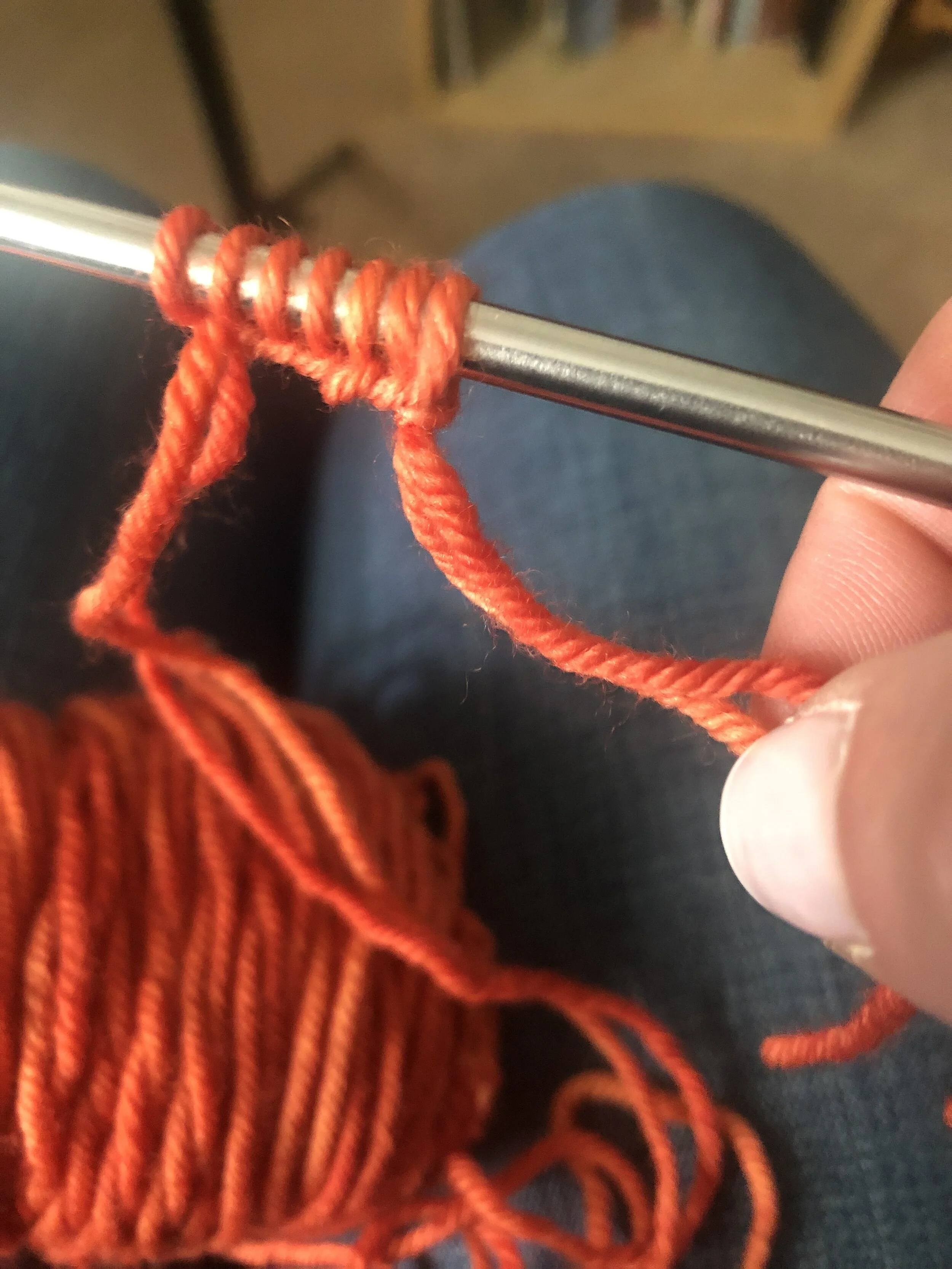
Long-tail is my cast-on of choice, but there’ve been plenty of times that I’ve come up short on yarn in the middle of casting on a large number of stitches. This is a trick I like to use when I just can’t estimate what the length of my tail should be - usually because there are too many stitches to cast on.
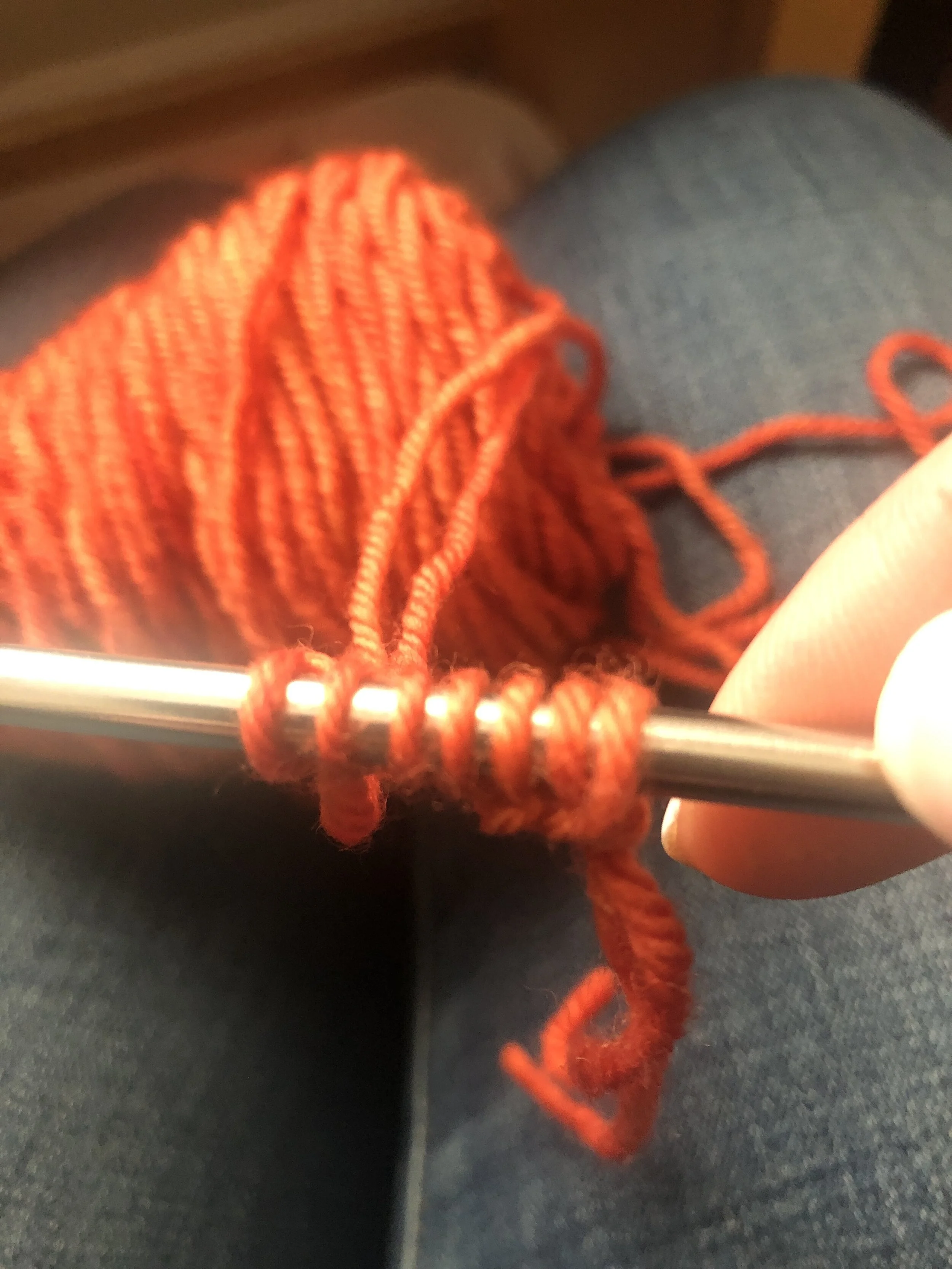
Nothing worse than the tail coming up short when you have just cast on 300 stitches and need 308!

Fudge Friday: Whatsa matter, yoke?

Riparia, with it’s floral yoke was ultimately a fun design that taught me quite a bit.
You might know there are a few ways to construct a yoke sweater. What’s a yoke you may ask? It’s a sweater in which the part above the armholes looks somewhat like a cone.

This is the schematic for Riparia, a yoke pullover. It’s upside down on purpose - because it’s worked from the top down.
When a yoke pullover is worked from the bottom up, 3 tubes are constructed are constructed first - the body and both sleeves. They are then joined and the yoke is completed with decreases to the neck, circularly in one piece.
Riparia is constructed from the top down, meaning that first the yoke is constructed - with increases, then the yoke is separated into 3 parts - body and sleeves - and then the pullover is finished by knitting 3 tubes.
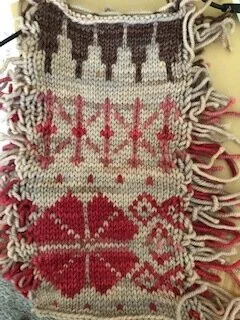
Swatching for Riparia.
Now you can insert those yoke increases (or decreases) in a couple of ways, but the only way I knew about was the way I learned: increase between solid resting rows. In the swatch above, you can see the grayish taupe solid rows were where I inserted the increases.
However, you can also see that the pattern is not centered. When you get to the flower, it looks off.
So I wrote the pattern and handed it off to a sample knitter - not something I usually do. She wrote back to tell me it looked off, although the stitch counts worked. Enter my tech editor.
With one look, she told me I’d have to create wedge increases. What’s that you say? Think of a pie and then mark the slices. This is what wedge increases create. Instead of putting all the decreases you need in one round, you put them in in each wedge, like this:
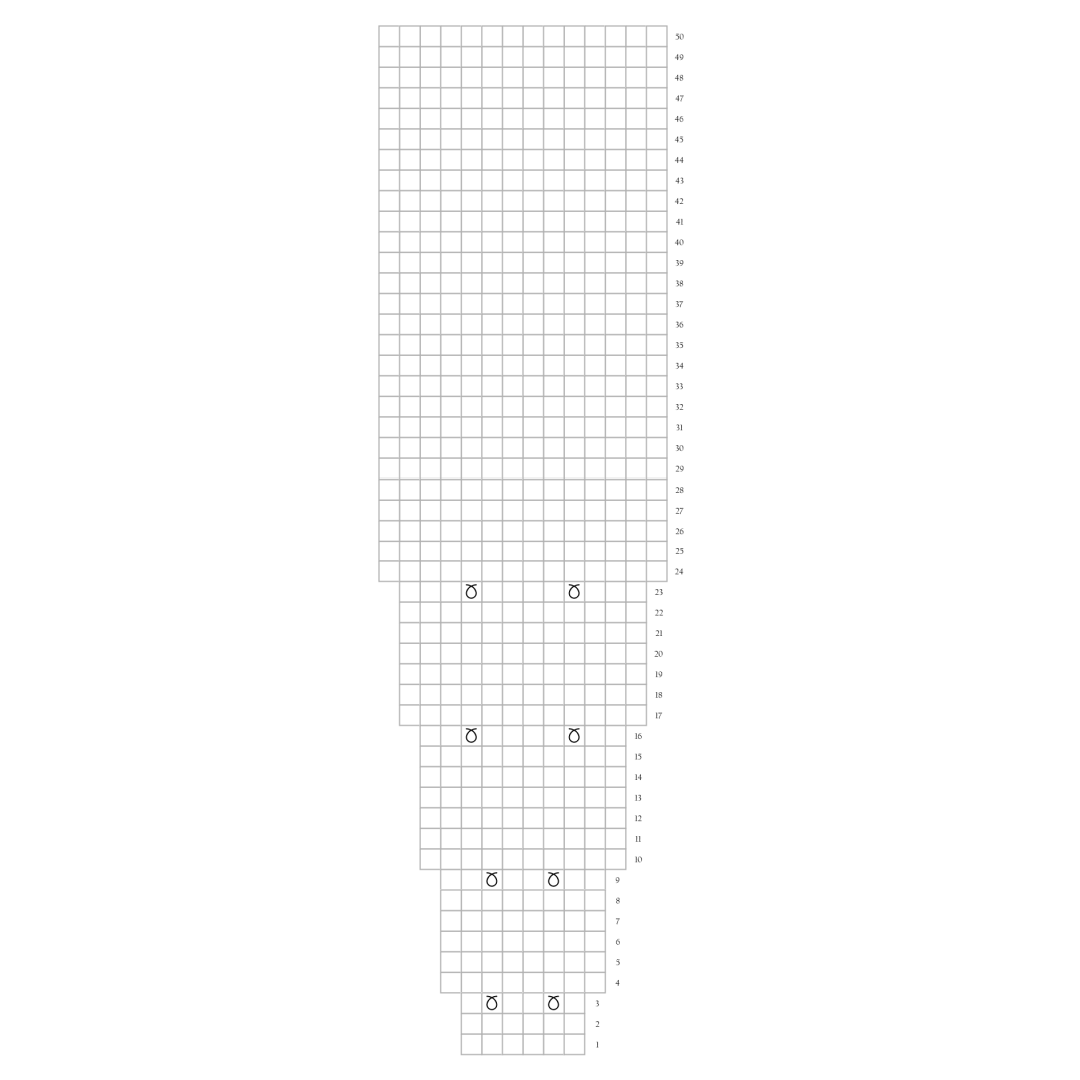
Here’s the wedge representing one pattern repeat. The curls indicate increase placement and the wedge grows from 6 sts to 14 sts.
The stacked motifs are always centered in a wedge yoke design.

Here you can see that the yoke motifs are now centered as they are stacked.
I love how Riparia turned out, but it was a long road to get there. The good news was that I learned that there’s more than one way to construct a yoke.

Fudge Friday: Distractions
We’re back to Fudge Fridays where I confess my knitting mess ups.
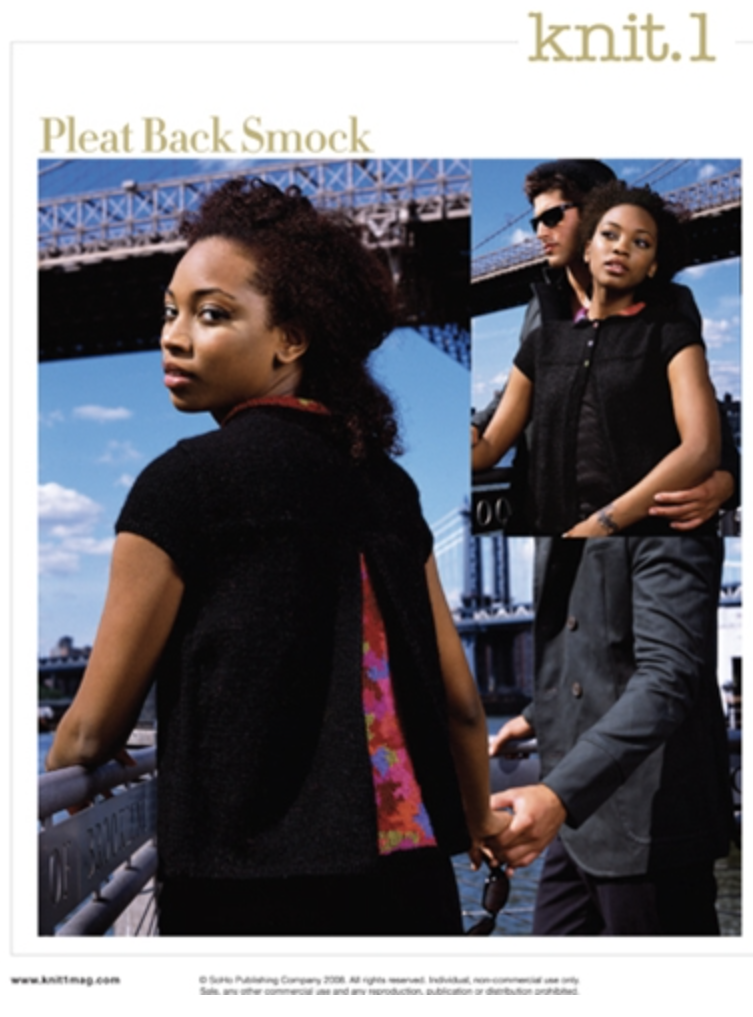
This design was a take on an artist’s smock. I loved this little cardigan. It had three buttons up top and flared open. On the back was a pleat with an “artist’s palette” with 10 different colors of yarn, knit in intarsia.
I designed the cardi for Knit.1 magazine, a funky little publication now out of print, to be knit in pieces from the bottom up. I was on a tight deadline (as always), but had written the pattern. I started with the back. The pleat was dead center of the back and as it went up to the neck, stitches were decreased on each side (in black).
I confess, I was watching a baseball game (my team, the Yankees - I was born in the Bronx) and my husband was talking to me. I shouldn’t have been anywhere near anyone for the set up, at least, but…you guessed it: I miscalculated and the pleat wasn’t centered.
It wouldn’t have been that bad if I only had to take out the cast on, but I was at the underarm before I realized it!
ALL THAT RIPPING IN 10 DIFFERENT COLORS! I was so upset that I had wasted all that time and now the deadline was even tighter. But, in the end, it turned out perfectly. It’s still one of my favorite pieces.

Lesson: Pay attention to the set up!
The Pleat Back Smock pattern is available from the Vogue Knitting store here.

Fudge Friday: Rotten Heel
We all mess up sometimes. It’s part of being human. And I’m going to use this space to discuss the times I’ve done it in knitting. Hey, you never know…maybe I’ll occasionally even use the space to talk about the times I’ve messed up in life. I’m calling it Fudge Fridays because I’m trying not to use the other fu… word.
Recently, I designed socks. (If you’re interested in testing them, follow me on Instagram, or sign up for my testing newsletter). They’re highly cabled with a smidgeon of lace. I think the main cable looks like a delicate shield, and I love how the cables to each side complement the main cable.

The good sock - blocking.
In any case, this particular sock was being knit from the cuff down, meaning I was having a grand time knitting all over cables. Now, in my head I knew that there was a difference in gauge between the cable and the Stockinette stitch sole, but I thought (wrongly) that I could adjust for this after the heel flap was done by having more gusset decreases.
Turns out I couldn’t because it makes the gusset too long, making for a baggy sock. So, R I P went the gusset, R I P went the heel turn, R I P went the heel flap. And as all you sock knitters know, those are the parts of the sock where you use the most energy. The rest (cuff and foot) are usually smooth sailing.

This is the moment I decided to rip. You can see the sock is off the needles. Here goes…
I was a bit frustrated, but after sitting awhile to think about it, I decided to decrease before I started the flap. Voilà. All better!