
Math Monday: Increasing - Part II - across a row
We’re ending our little mini-course on calculating increases and decreases with perhaps, the trickiest of all, increasing across a row. Not difficult to figure out, but tricky because increase placement depends on what kind of increase you’ll be working.
Let’s get the easy part out of the way first….
We want to start out with how many stitches we have on the needle at present. In other words, don’t use the final stitch count after the increases. You don’t have that many stitches yet!
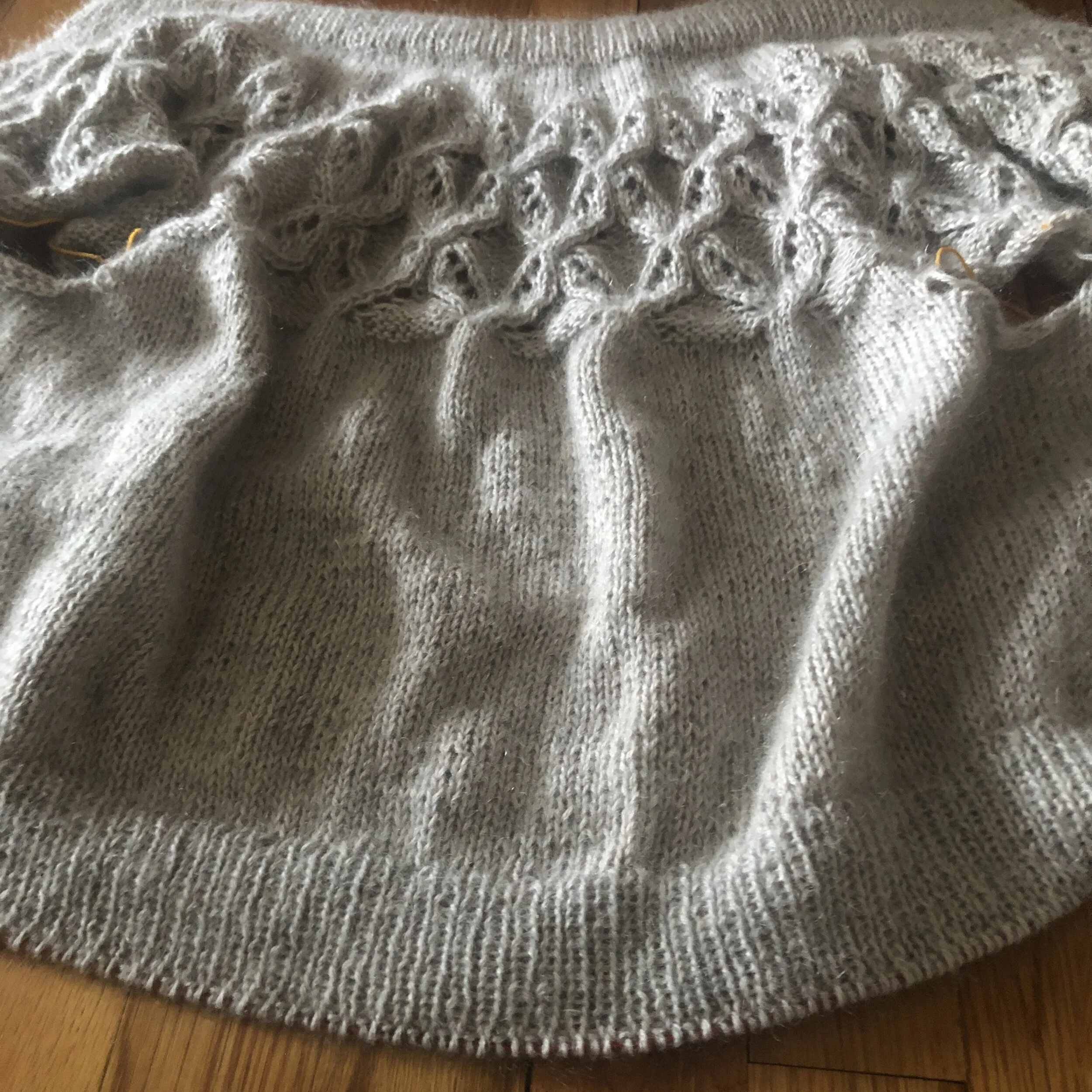
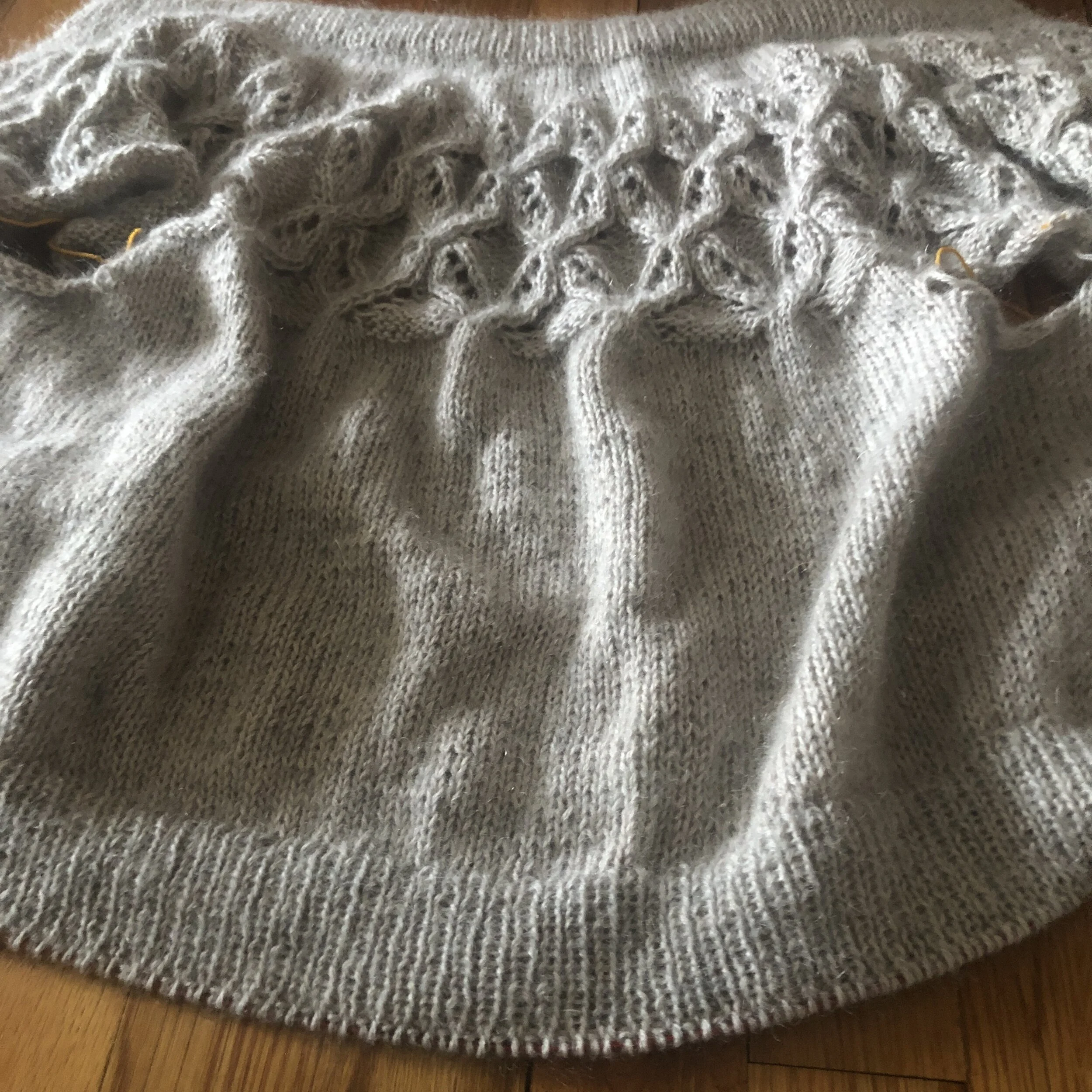
Soul Perch - a cardigan to be published spring 2021.
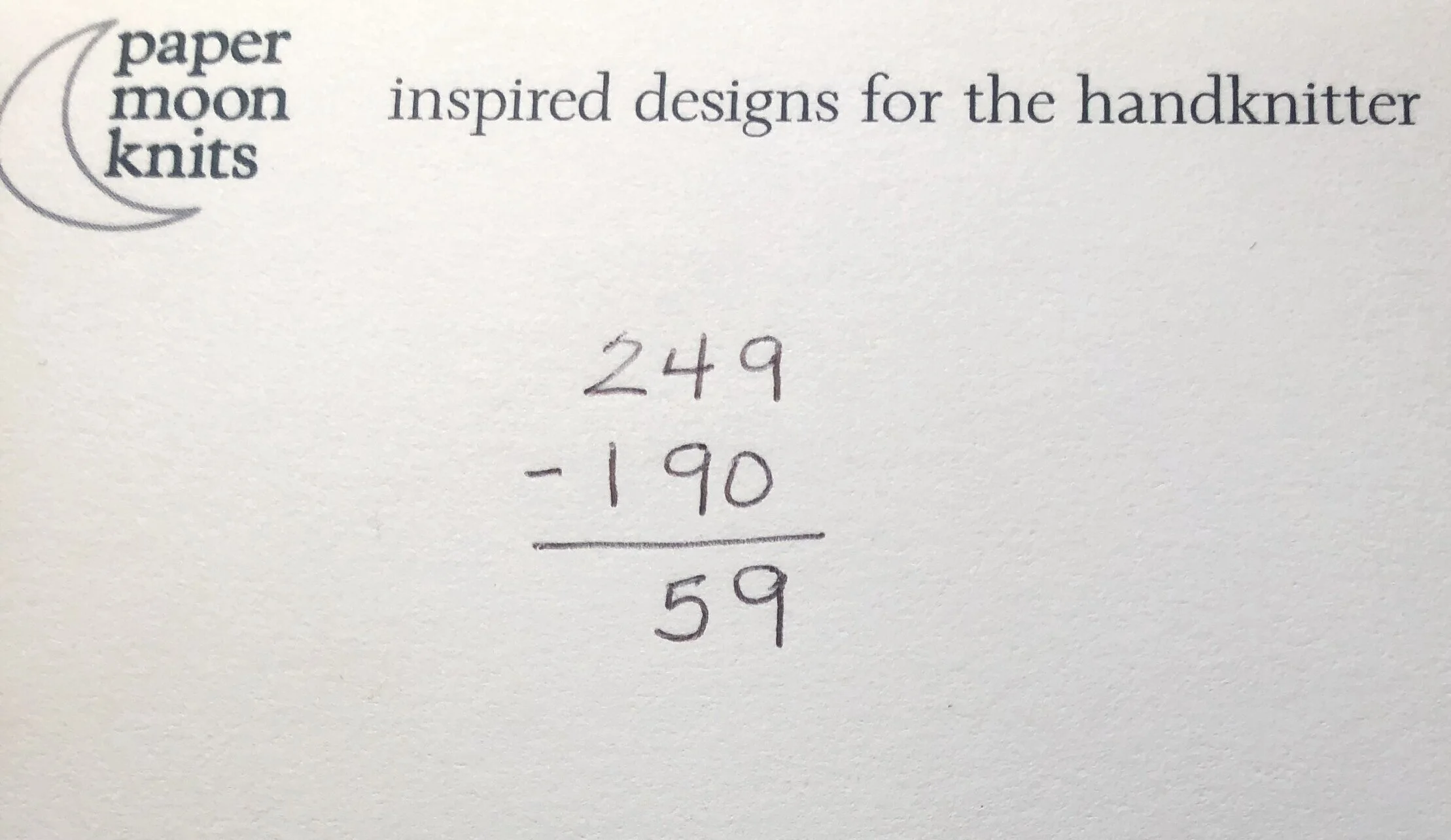
In this cardigan (to be published later this spring) which is worked from the top, we have 190 stitches on the needle for the body in Stockinette and we need 249 stitches for the ribbing.
This means we need to increase 59 stitches. {Subtract 190 from 249}
Divide 59 into what you have to work with….190 stitches.
Just like in our previous calculations, we divide; add 1 to the quotient; then subtract the remainder from the dividend and draw an X.
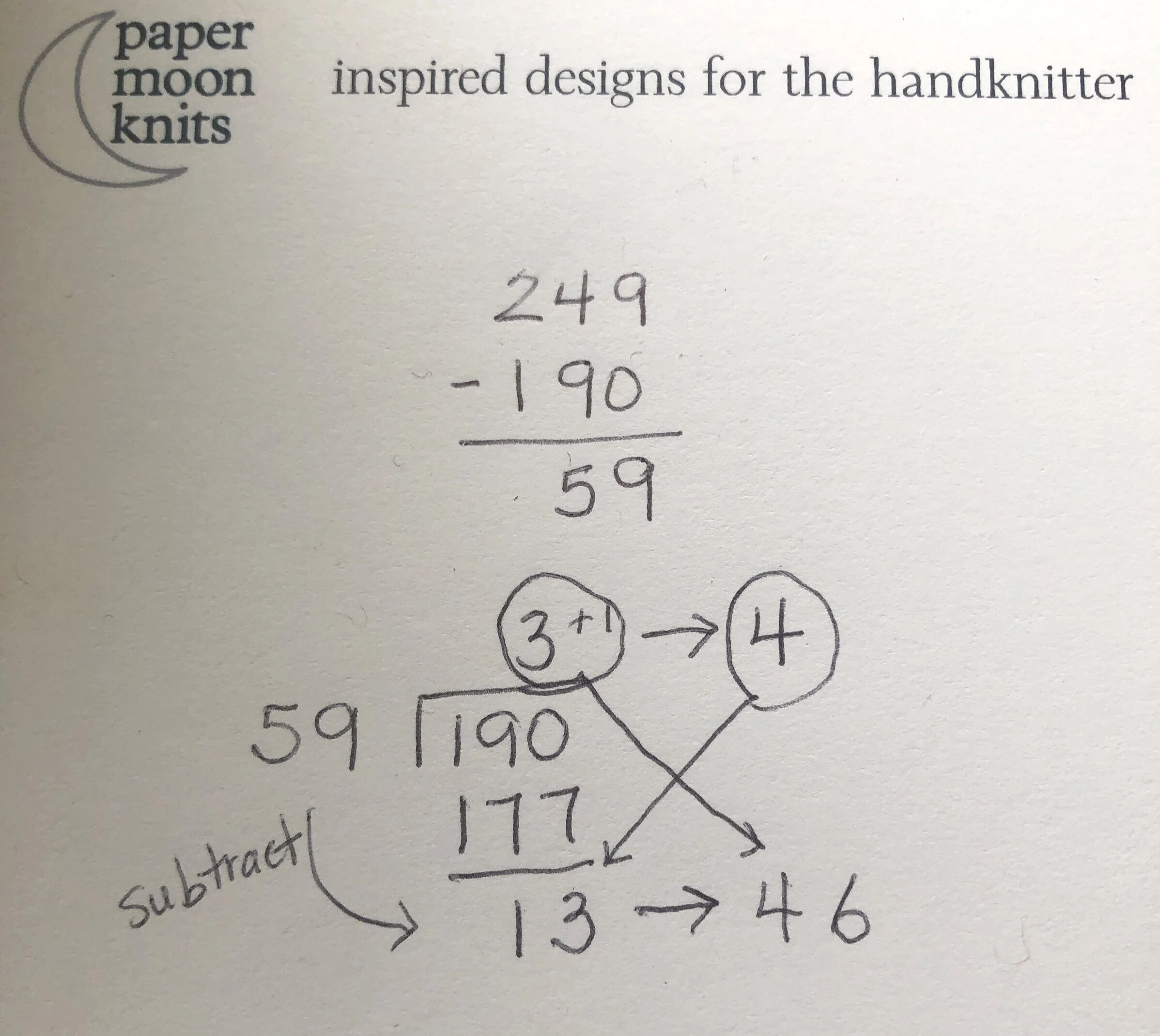
The formula tells us that we will increase 1 stitch every 3 stitches 46 times and every 4 stitches 13 times.
Remember our discussion on not decreasing on the first or last stitch? If you don’t, go back and read this post on decreasing across a row. We want to split that first 4 stitch increase in half and do the first one after 2 stitches.
But more importantly, we want to think about the increases we’ll use. This will help determine where to put them.
There are quite a few types of increases: knit through the front and back loop [kfb], yarn over [yo], Make 1 (and Make 1 Right and Make 1 Left [M1, M1R, M1L], and left leaning and right leaning increases [LLI, RLI].
The kfb, LLI and RLI all use the stitch on the needle itself. The yo is created with the working yarn. The M1, M1R and M1L all use the running thread between the stitches already on the needle.
Let’s use our example of placing increases every 4 stitches 13 times, and let’s also eliminate the kfb from our discussion. I rarely recommend using it unless you want the worked stitch to be a knit and the increase to be a purl.
For LLI you will make the increase in the 4th stitch by working the stitch, and then lifting the left leg of the stitch 2 rows below onto your needle to work the increase. The increase will slant left.
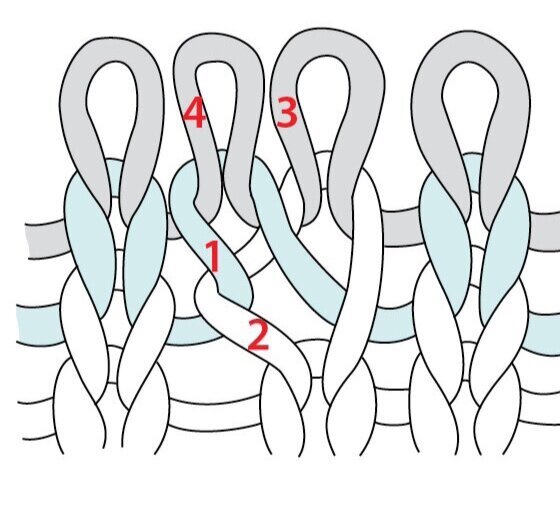
Left Lifted Increase - image (c) interweave.com
For the yo, M1, M1R, and M1L, you will make the increase after the 4th stitch has been worked. For the yo, just work the 4th stitch and yarn over. For the Make 1 increases, work into the running thread between the 4th and 5th stitches.
However, for the RLI, the increase is made in the 5th stitch. To work this increase, work the 4 stitches, then pick up the right leg of the stitch below the needle and knit into it, then knit the 5th stitch. The increase will be between the 4th and 5th stitch and lean right.
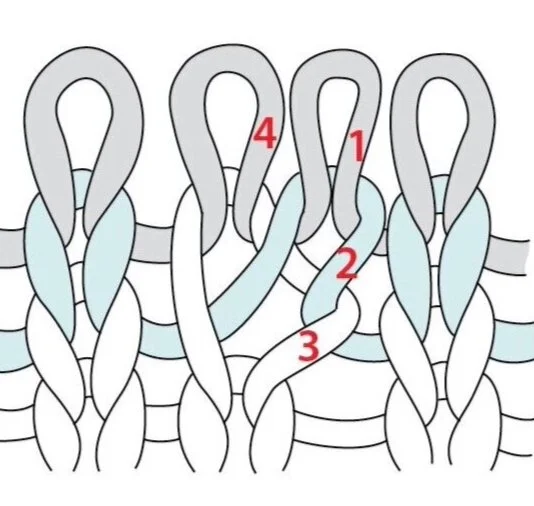
Right Lifted Increase - image (c) interweave.com
Next week, our math discussion turns to counting!

Math Monday: Increasing - Part I - along the length
A few Mondays ago, I discussed decreasing along the length of knitted fabric, and we did the calculations. Today, we’re going to do the same thing for increasing. You can read that here (in fact it might be useful if you did before you begin reading this one.)
The sleeve of Ledbetter is worked from cuff to underarm with a modified drop shoulder shaping to eliminate bulk at the underarm.
This works the exact same way, so let’s review using a new sweater that I’ll be publishing in the late summer/early fall, Ledbetter. Ledbetter’s sleeves are worked in the round from the cuff to the upper arm and then seamed onto the body. The sleeve is mostly worked in Stockinette stitch but it starts with a bit of the textured pattern - 1.5” [4cm]. The length of the entire sleeve with the cuff is 16.5” [42cm], but I’ll only be doing the increasing over the stockinette portion of the sleeve, not the cuff. That’s 15” [38cm].. As I wrote when we discussed decreasing, it’s never a good idea to immediately begin decreasing or increasing on the first row/round, and it’s never good to end them on the last row/round either. I usually begin and end with 1” [2.5cm] at the beginning and end worked even.
So, if we take out the 1.5” for the cuff and the 1” at the top and bottom the sleeve (2” total), we are left with 13” (16.5 - 1.5 - 2 = 13”). At a Stockinette row gauge of 6.75 rounds per inch, that leaves us with approximately 88 rounds with which to work {13 x 6.75 = 87.75 - I always round to the nearest even number}.
For Size 2, the cuff begins with 40 sts (9” x 4.25 sts/inch - rounded to the nearest 4 sts) and the upper arm ends with 60 sts (15” x 4 sts/inch), which means I need to increase 20 sts. Remember, these stitches are worked in sets - one at the beginning of the round, one at the end of the round. I’ll need 10 sets of 2 stitches each totaling 20 sts. However, I’ll do the very first set on the very first round since I’ve already left 1” before I’ve started the decreases I won’t need to leave more. This now brings the total down to 9 sets of decreases over 87 rounds.
I do the math just like I did for decreasing:

With this set up, you can see that you’ll have to do a increase every 9th round 3 times and every 10th round 6 times. You can decide how you’d like to set this up - you could do it as it’s laid out or you could do *every 10th round 2 times and then every 9th round once and then repeat from * twice more. All your increases will be evenly placed along that sleeve!
Of course, if you want to shorten or lengthen your sleeve, with this formula, it’s easy to do. You’ll still need the same number of increase sets (your divisor), but your dividend will change. You can use math to evenly space out your increases every time.
And this has other uses besides sleeves. You can add body shaping (waist to bust shaping (bottom up) or bust to waist (top down). for example. Or you can use this to modify a front or back neck depth or adjust an armhole.
A few thoughts before we finish…
Just like with decreasing, increases should never be placed at the very beginning or end of the row or the round. If you’re working in rows, it will be difficult to seam. If you’re working in rounds, the stitches will be distorted at the “seam line.” I usually place mine 2 stitches after the start of the row/round and 2 stitches before I end the row/round.
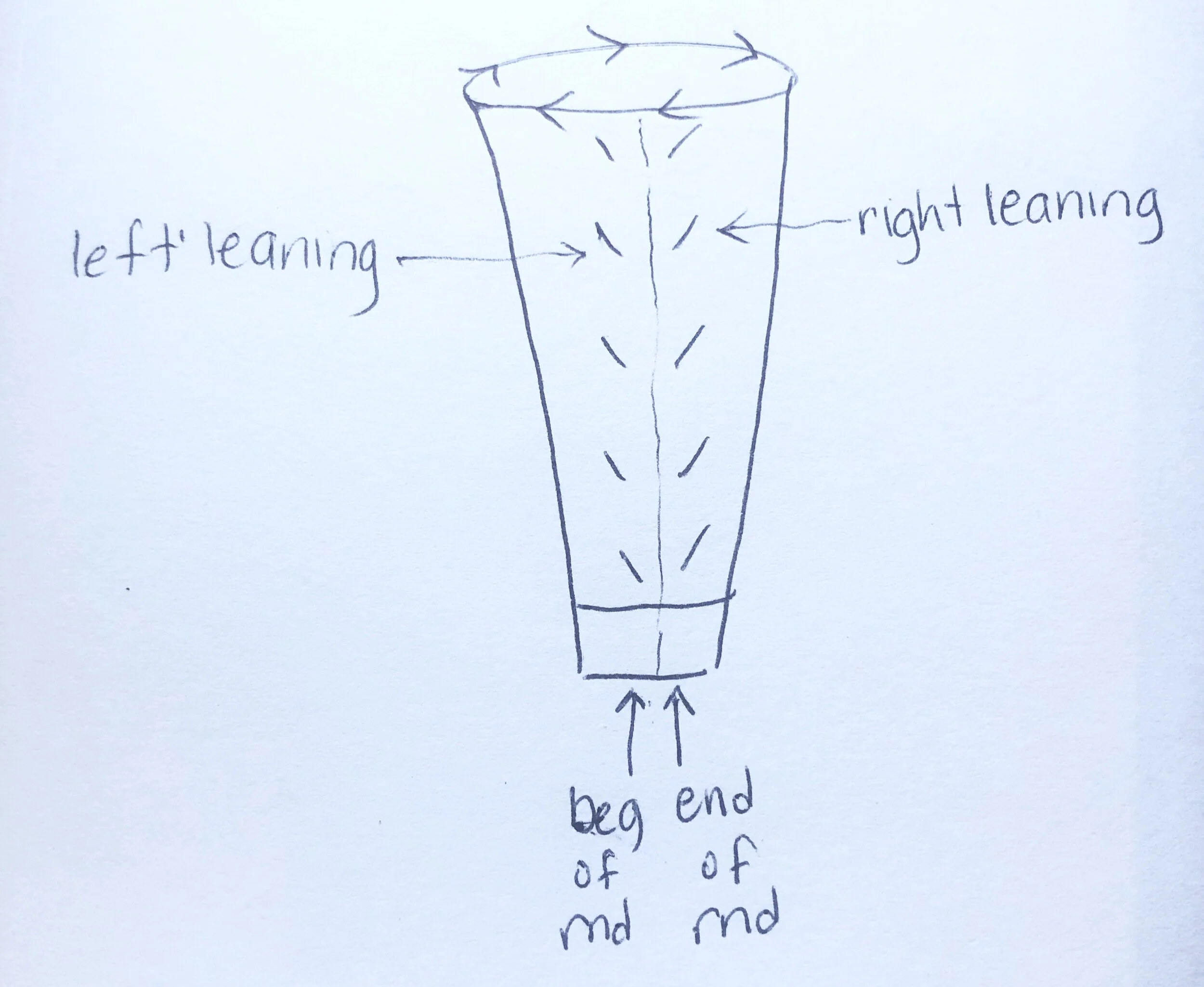
Another hint to make your knits aesthetically pleasing is to be sure your increases “lean” the way your sweater is growing. For example, in this sweater, the sleeve is being worked from the cuff up to the underarm, growing in circumference. Therefore, the increases at the beginning of the round should lean left and the ones at the end should lean right.
Using math to make adjustments to your knitting in this way will help you customize your garments for a more perfect fit.

Fudge Friday: Whatsa matter, yoke?

Riparia, with it’s floral yoke was ultimately a fun design that taught me quite a bit.
You might know there are a few ways to construct a yoke sweater. What’s a yoke you may ask? It’s a sweater in which the part above the armholes looks somewhat like a cone.

This is the schematic for Riparia, a yoke pullover. It’s upside down on purpose - because it’s worked from the top down.
When a yoke pullover is worked from the bottom up, 3 tubes are constructed are constructed first - the body and both sleeves. They are then joined and the yoke is completed with decreases to the neck, circularly in one piece.
Riparia is constructed from the top down, meaning that first the yoke is constructed - with increases, then the yoke is separated into 3 parts - body and sleeves - and then the pullover is finished by knitting 3 tubes.
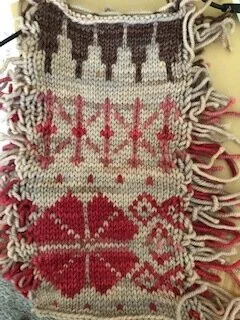
Swatching for Riparia.
Now you can insert those yoke increases (or decreases) in a couple of ways, but the only way I knew about was the way I learned: increase between solid resting rows. In the swatch above, you can see the grayish taupe solid rows were where I inserted the increases.
However, you can also see that the pattern is not centered. When you get to the flower, it looks off.
So I wrote the pattern and handed it off to a sample knitter - not something I usually do. She wrote back to tell me it looked off, although the stitch counts worked. Enter my tech editor.
With one look, she told me I’d have to create wedge increases. What’s that you say? Think of a pie and then mark the slices. This is what wedge increases create. Instead of putting all the decreases you need in one round, you put them in in each wedge, like this:
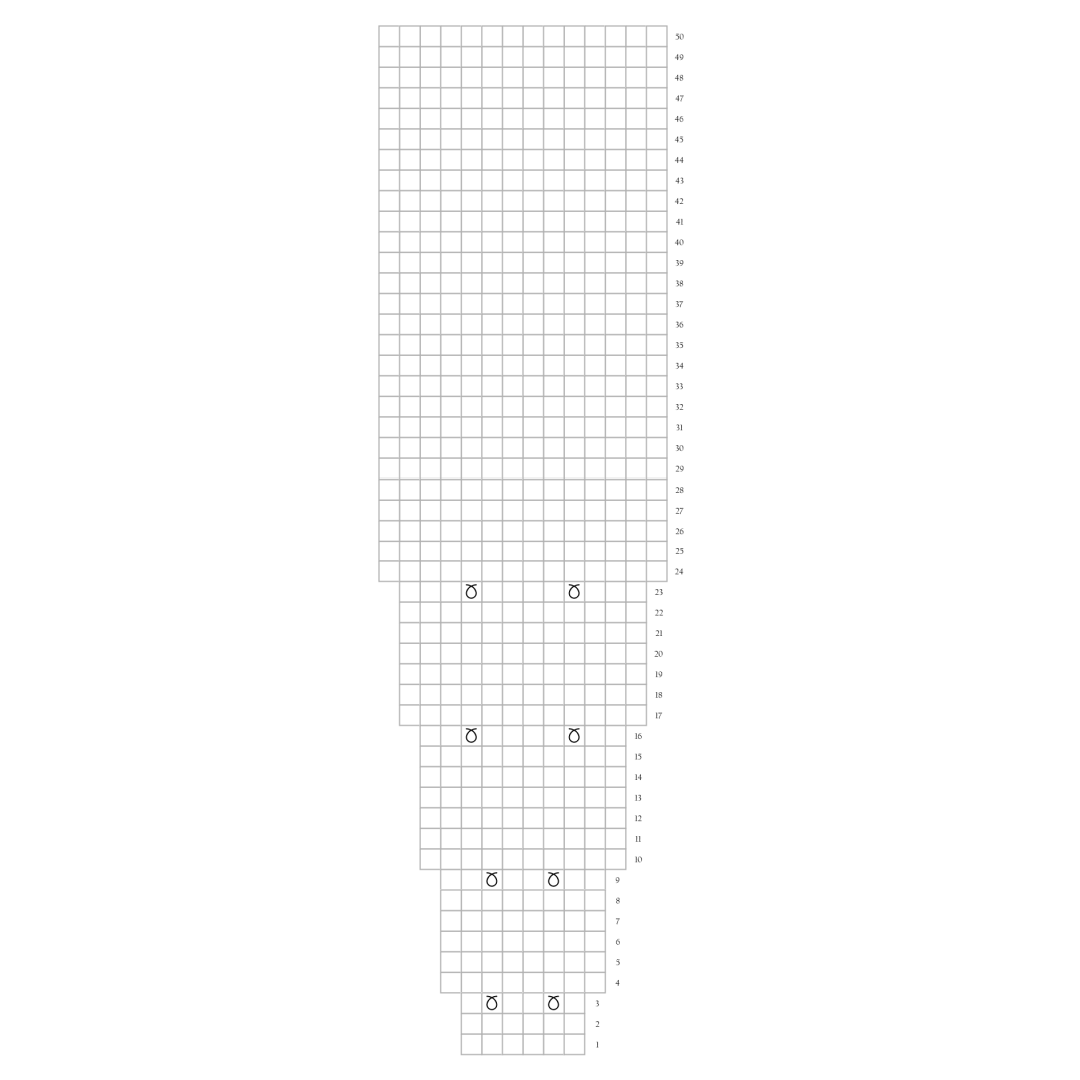
Here’s the wedge representing one pattern repeat. The curls indicate increase placement and the wedge grows from 6 sts to 14 sts.
The stacked motifs are always centered in a wedge yoke design.
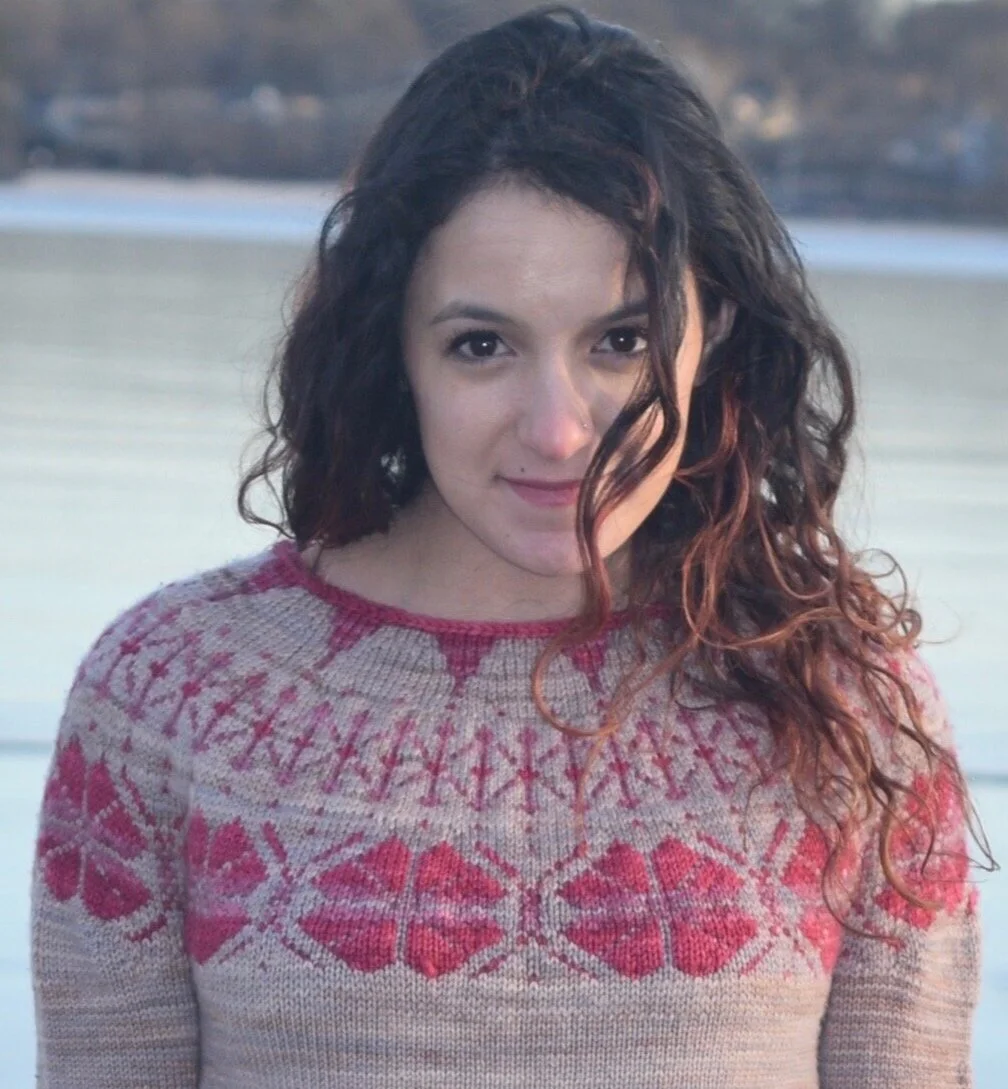
Here you can see that the yoke motifs are now centered as they are stacked.
I love how Riparia turned out, but it was a long road to get there. The good news was that I learned that there’s more than one way to construct a yoke.